I know perfectly well why I saw it two out the four times that I did: I am a world class comic book geek. Captain America, in particular, is a character I've been following since childhood, and although Marvel Comics handles him in some extremely dumbass ways, I would follow Cap anywhere. But why? Well, superhero comics are modern mythology. Where there was once Zeus, Hercules, and Dionysus, there is now Superman, Batman, and The Avengers. The parallels between modern day superheroes and ancient myth are numerous.
One of the most interesting parallels was made popular by comic book historian Michael Uslan:
"The room looked like the Justice League of America secret sanctum, and I’ll never forget the dean looking at me from the end of the table and saying, “So you’re the fellow who wants to teach a course on funny books at my university?” I launched into my thesis and he let me talk for two or three minutes before cutting me off. “Come on, Michael! Comic books as mythology and folklore? Art? And literature? Give me a break! Comic books are cheap entertainment for children – nothing more, nothing less." So I said to him “Can I ask you two questions?” He said, “Ask me anything you’d like.” I said, “Are you familiar with the story of Moses? Can you summarize very briefly the story of Moses?” He looked at me like I was crazy and replied, “Well, I don’t know what game you’re playing here, but I’ll play it with you. The children of Israel were being persecuted, their first born sons were being slain. A Hebrew couple put their infant son in a wicker basket and sent him down the River Nile where he was discovered by an Egyptian family and raised as their own son. When he grew up and learned of his heritage, he became a hero to his people because …” And I said “Stop. That’s great. You said before that you read Superman comics?” “Yeah,” he said, “I always read them as a kid.” I asked, “Do you know the origin of Superman?” and he replied, “The planet Krypton was about to blow up and a scientist and his wife placed their infant son in a little rocket ship and sent him to Earth where he was discovered by the Kents who raised him as their own son. And then when he grew up …” He stopped, stared at me for an eternity, and said, “Mr Uslan, your course is accredited.” I became the first college professor of comic books!"
It is my belief that people need mythology and that people need the world to be mythologized in order to make sense of it. Each and every time I dive into a comic book I am transported to 'a stronger, loving world'... Did you catch that? Tell me what I'm referencing in the comments section and I'll do my best to figure out a prize to give you. But just like how comic books transport me to an incredible and fantastic universe, superhero movies do the same thing.
 The Avengers may just be the best entertainment this side of the millennium. But still, why was The Avengers such a colossal success? Of course there is the obvious: Taking a group of superheroes, popular in their own right and fresh off their own titular films, and cramming them into one movie is bound to draw some spectators, but that doesn't explain why those films were so successful in the first place. Let's look at things from a social perspective: The world is in a tough spot and has been for a while. Americans, in particular, are feeling more depressed by the day as they continue to be driven to bedlam by a broken and abhorrent political system. The world is bigger now than ever before. Now more than ever humanity's plight appears all the more frivolous. Now I'm not saying that the world needs a superhero, although I do in my heart of hearts believe that to be the case, I would never disrespect anyone's hardship by implying that what they need is a super-man in a super-suit with super-righteous super-goals inspiring them to pursue super-deeds. What the world needs far more than a superhero is a break. The Avengers gave us a two and a half hour block where we were free to forget about our problems. What I'm saying is that everyone needs to escape from something, I believe that to be part of the human condition. For me The Avengers is far more than easy escapism, the subject material being a great interest of mine, but I recognize that The Avengers supplied me with exactly that: Escapism. And there is absolutely nothing wrong with escapist cinema, in fact I believe that is the way movies ought to be.
 As far as the film itself is concerned there is very little that is technically innovative or revolutionary about it and that's perfectly acceptable. It wouldn't have been the kind of experience that is was had it pretended to me anything other than pure fun. A few rotten apples use this to justify why The Avengers failed as a truly great movie, and some even go so far as to say that The Avengers is actually a harmful film that dumbs-down an already disassociated audience with watered-down heroics. I disagree on both fronts and would even add that these naysayers are not only a deluded and miserable lot but that they also fail to understand the most important and consistent tenet of the cinema: Entertainment. Film started off with peepshow pioneers who gave the poor folk of the world ten seconds of joy, and that same basic practice has since expanded and evolved into The Avengers: Cinema Fulfilled. No, The Avengers does not fail in any conceivable way, in fact it is monumentally, monstrously successful in every way it tries to be. The Avengers is much more than a movie, its an experience. The Avengers gave us epic battles, a considerable amount of character development for a film of its type, amazing special effects, a rag-tag team of superhero underdogs, Sam Jackson with an eye patch, and a hot chick with seemingly deadly strands of hair. Those who say they hate the film, I am also convinced, must hate all of these things.
 Captain America, Thor, The Hulk, and Iron Man are a few of Marvel's best loved characters, several of them are longstanding flagship titles of the comic book company. They are all given the treatment they deserve here so as to make sure that neither the hero nor his fans are treated as second class. It is the same delicate treatment the heroes had received previously in their own films independent of The Avengers. Captain America: The First Avenger remains my favorite of the pre-Avenger films. I found Captain America: The First Avenger to be one of the most warm-hearted and genuinely pleasant movies I had seen in a very long time. I stated earlier how much Cap means to me as a comic book character and I was so glad to see the film communicate some of the reasons why I love him so much. The First Avenger was a gift I was proud to call my own. I found it to be the definition of pure and innocent cinema. It reminded me of the Indiana Jones series, and other films of that nature, just as the comics do. The First Avenger has an unprecedented rewatchability factor. It is fairly faithful and spiritually intact. It is a glorious and heart warming film. I found this movie version of Cap to be almost just as inspiring as his comic book origins, and although it is a playful film, its not afraid to get intensely intimate and shamelessly patriotic. Yeah. The First Avenger actually makes me feel patriotic, I think that may be one of the reasons I love the Cap so much in the first place. The film romanticizes many things that don't seem to exist anymore, patriotism is one of those things, so's honor, sacrifice, bravery, and devotion. Also I must add that I found Hugo Weaving's turn as The Red Skull, my absolute favorite comic book villain of all time, to be an inspired one. I thought that he gave the best performance of the series. But everything about The First Avenger is pitch-perfect and refreshing, most of all it brings a smile to my face and makes me feel good, and that's something only the best movies can do.
Kenneth Branagh was not an obvious choice when it came to hiring a director who was capable of bringing Marvel's Mighty Thor to life but he sure turned in a wonderful effort. Thor was a very good film and must have been much more difficult to pull off compared to the rest of The Avengers team who were either completely grounded in reality or were at least acquainted with it. Thor was absolute fantasy and Thor was an absolute triumph.
The Incredible Hulk was the weakest link of the series. Edward Norton proved to have been a misguided choice for the tortured Bruce Banner and the rest of the cast seemed totally uninterested in what they were doing. Still. One runt does little to spoil the litter.

These films seem to have done the impossible: Tap directly into what makes movie-goers happy and concoct a tried and true formula for it. Yes, these films are formulaic but rarely do they really feel that way. And what's the big deal if The Avengers does follow a formula if its a structure that works? Its not meant to challenge its audience, its out to involve them in the drama. Think about it, its easy to stuff your film with lofty idealism and conceptual labyrinths, but its much harder a task to make your film soulful. And that's something that all of The Avengers films have in common: Heart and Soul. The film is also likable, faithful, and has been unbelievably capable in providing true joy to so many people, young and old, and dare I say inspire them to be that much happier in their own lives. The Avengers equipped its viewer with the necessary tools needed to be wowed. And wow the world it did.
Just as a side-note: Three cheers for Tom Hiddleston who really gave The Avengers everything he had as the villainous Loki. He was not only consistently and believably threatening and wicked, he was charismatic enough to carry the entire conflict of the film on his shoulders. If The Avengers was not supposed to be a film of great performances Tom Hiddleston obviously didn't get the memo. He was extremely good here and I applaud the work he did by making Loki just as iconic as the superhero team that had been assembled to eliminate him. Bravo!
 The Avengers is now one of the all-time essentials and it is a film that is very deserving of that title. It was a monster hit because it was given to a world in a social climate that desperately needed something fantastic to happen to them. It was a film that was tailor-made for every single person who paid to see it. Those who refuse it must refuse a lot of spectacular things in their life because the sole goal of The Avengers was to entertain YOU and only YOU. Marvel and Co. personally invited you to take a rest in their world, and to those that took advantage of Marvel's hospitality were handsomely rewarded and fiercely entertained. I wish to thank Marvel for putting so much faith in their books, so much faith in the fans, and so much care in putting out a product of such high quality. Marvel Studios have proved that not only is it great time to be a comic book fan but its a great time to be a movie-goer. I wish more companies were like Marvel for as a fan I have never been treated so kindly. Marvel is a company that is very rare in this world: They care about their fan-base and go out of their way to cater to them every chance they can get. The Avengers is a great movie and I just can't wait for round two!
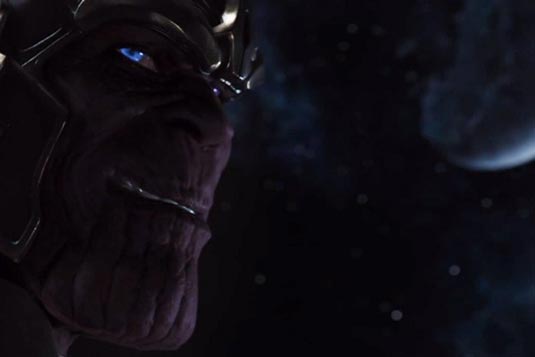 | |
| Until then... |
-Z. Frances