Showing posts with label French New Wave. Show all posts

Saturday, January 5, 2013

Four In The Wave - Written By Zach Frances

For this ongoing CineThreatOnline series I will be selecting films from four of the most influential filmmakers of all time: Michelangelo Antonioni, Federico Fellini, Francois Truffaut, and Jean-Luc Godard. All four of these legendary filmmakers emerged in the 1950s and '60s as part of two separate but equally revolutionary movements: The Italian and The French New Wave. They are some of the most incredible filmmakers of all time, and their films are not only consistently thought-provoking but occasionally downright genius works of art.

The Filmmakers: Michelangelo Antonioni, Federico Fellini, Francois Truffaut, Jean-Luc Godard.
The Films: L'Avventura, 8½, The 400 Blows, Vivre Sa Vie

First. The Italians:

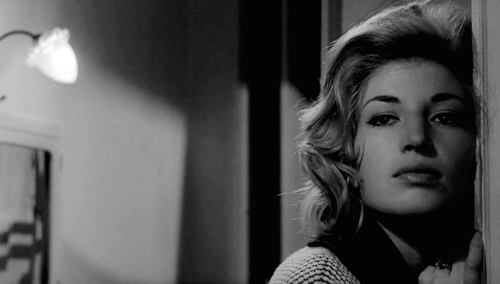
Michelangelo Antonioni is a polarizing figure in the film community. You either love him or you hate him. Me? I absolutely love his films! L'Avventura is one of most enigmatic films I have ever seen. L'Avventura tells the story of the disappearance of a young woman and how (if) it affects the other characters in the film. The film stars Monica Vitti and Gabriele Ferzetti as the only two people with any conviction as to actually find out what happened to her. Along the way, even they lose interest with their missing friend, and become much more interested in each other. The fate of the missing girl is hardly a misnomer. The film is wonderfully acted and the script is so good it can cause a delirious side-effect of awesomeness. Most impressive is how L'Avventura looks, and the thing looks gorgeous, possibly the best camera work done in an Antonioni film. And the people are beautiful! Honestly, take a gander at Monica Vitti:

Monica Vitti is one of the most beautiful women ever photographed. You honestly can't your eyes off of her. In contrast to her stunning appearance, the character she portrays is soulless. Empty. Then you start to realize that's the point of it all. Everything looks beautiful in L'Avventura, but it's all empty. From the characters to the very world they inhabit, its all a heartless vacuum of emptiness. But God, it looks unbelievable. The emptier you are, the more beautiful you become. Antonioni communicates a great deal here about humanity. About vanity. About waste.

The acting is very impressive. Monica Vitti turns in the best performance of her film career, as does Gabriele Ferzetti. Another top-notch performance is given by Lea Massari as the woman who goes missing. In her brief amount of screen time she lays down a mesmerizing performance. She plays her character as displaced, jaded, and finally waking up to the world around her. To the emotions she is actually feeling. She is not as empty as the rest, its almost as if she can recognize the emptiness in her soul and it makes her sad. So when she finally does go missing, the audience really has no clue what actually happened to her. Massari plays the part so well that the cause of the disappearance could be wide variety of things. An accident? A murder? Did she kill herself? Did she run away? Her performance is so eerie that it haunts the rest of the film. Vitti's character treats her as you would a phantom, and so do we. Did she even exist? Did she actually exist at all? Lea Massari is the phantom, but Monica Vitti is the enigma. Why is she so mysterious? Why is she so damn alluring? Monica Vitti is an intoxicating force to be reckoned with here, and by the end of the film, you still never really got to know her. Because truthfully she isn't anyone. She is a ghost that's afraid of scaring herself. She is the ghost of a good thing. The most visually stunning haunt in the entire cinematic universe.

I actually always looked at L'Avventura as the Arthouse's most intelligent and legitimately scary ghost story. I always viewed the characters not so much as actual people, but as impressions of living things. A practical joke on behalf of the living. Monica Vitti seems to be the only one who isn't in on the joke, as she struggles with losing her humanity. But alas, she is so beautiful she is unreal, she is ghostly, something so perfect she must be an apparition. A mirage. An imitation of life. And the film never judges its specimens. Not once does Antonioni pass any judgement on the characters whatsoever. You see what you want to see.

L'Avventura is also an Antonioni anti-mystery. The film sets you up for it, you think you recognize the give-away thematic elements, and then it takes you somewhere else entirely whilst the mystery takes a back seat. This would not be the last time Antonioni would take Hitchcockian themes and dissect them. He was known for turning film on its head. He was always exploring the boundaries of film, and he enjoyed it. He was an artist first and foremost, and L'Avventura was his Mona Lisa.


L'Avventura is one of the great treasures of the cinema. One of my all-time favorite films ever made, and one of the most mysterious films in my collection. I am awe-struck by Antonioni's vision, startled by it really. I am taken aback, my heart leaps out of my chest at such a beautiful sight when such an empty truth is underlying all notions of attraction. Attraction can be such an empty feeling. It's only when forced to live with said-attraction, that empty emotion, that it starts to haunt you.


Moving On To The Next Selection:

I'm going to be honest. As a movie-goer Fellini has always been a tough pill for me to swallow. He is one of the most self indulgent filmmakers ever to exist, and his films lose sight of themselves all too often for my liking. But 8½ is a different story. 8½ is a remarkable odyssey into the sordid mind of a filmmaker. It is the best movie ever made about making movies. Its Fellini's greatest achievement as a director, as an artist, and as a visionary. 8½ earns Fellini his legendary status. This might just be the most influential film I have selected for this segment. I highly enjoy 8½ and it is one of the few films by Fellini I can honestly say I have enjoyed fully from beginning to end. This is definitely one of the more daring films ever produced, surely one of the more honest jewels in the Arthouse, and if you haven't seen this debonaire classic for yourself.... you just haven't actually watched a film yet.

Next Up, We Have The French:

Francois Truffaut's The 400 Blows. The best coming-of-age story ever told. The most deeply moving experience I have ever had with a piece of 50s cinema. Partly auto-biographical, this was Truffaut's feature debut, and it was the best debut from a director since Orson Welles with Citizen Kane. Truffaut actually scheduled the shoot so that he would be the same age Welles was when he made Citizen Kane. Coincidence? I think not. Both films transcend the medium.

Words really can't do this film justice. If you've seen the film, then you can understand why I've selected it. The most moving motion picture of the 50s, directed by a natural born master of the medium. Essential viewing for all film fans.

Last But Certainly Not Least:
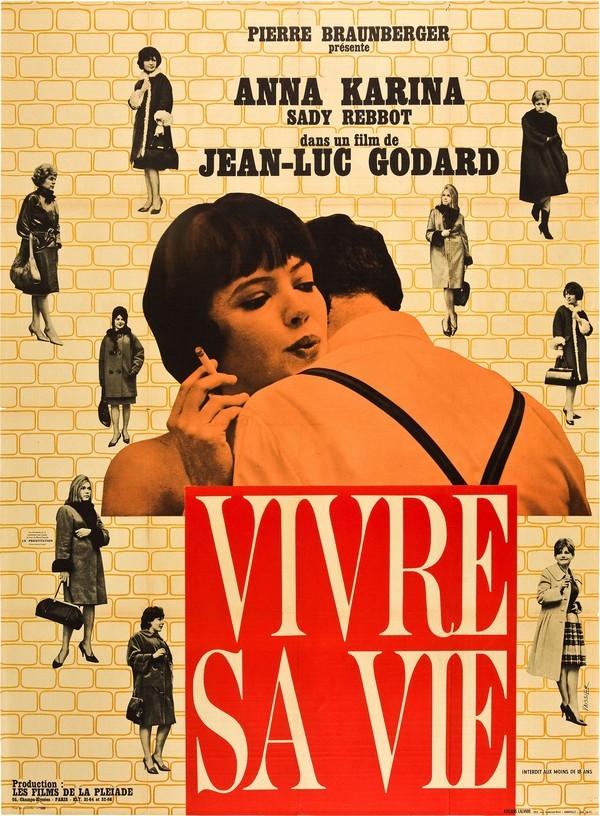
Whenever I'm asked what my favorite Godard film is, I always receive funny looks when I tell them Vivre Sa Vie. I know it's not as energetic as his earlier films like Breathless and Band Of Outsiders, but it is one of the only truly touching films Godard ever made. Watching Vivre Sa Vie is like a cinematic awakening. This film has a lot of heart. Nothing about the soul of the film is staged in any way, the soul of the film is defined by its own constantly evolving personality which makes the emotional toll of watching Vivre Sa Vie wholly organic and very real. Its as if we are watching a film being born out of an idea, we watch the film have fun with its new found life, and  we watch how it all ends. A clever metaphor for the life creative people give to inanimate objects, and for the passion that is ultimately lost on them. Godard never tries to force this one on you. Godard has split the film into twelve different tableaux in order to tell his story, a device that has been borrowed and used time and time again. The most important thing about Vivre Sa Vie is that Anna Karina's best performance can be found here as a prostitute in 1960s France. Karina is astonishing in Vivre Sa Vie. Physically and emotionally, she is a godsend.

Her eyes give everything away.

 Rather than go over the entire film and all of the ideas and statements Godard makes with it, which would take forever, I'll simply talk about one scene in particular that has since been branded into my heart.

It takes place in a movie theater. Anna Karina is watching Carl Theodor Dreyer's silent masterpiece The Passion Of Joan Of Arc, and begins to weep. We watch as she connects deeply with a film, and we in turn are affected by it as we are reminded of how moving a great film can really be. The entire sequence is breathtaking. One of the most touching things Godard ever filmed. This isn't to say that Godard is not a heartfelt filmmaker, there are personal moments in most of Godard's films, but sometimes he strives more of an artist than a human filmmaker. Here, in Vivre Sa Vie, the soul of the filmmaker can be found in all of its compounding sentimentality.

This scene means so much to me because never has the act of investing yourself emotionally in a film been explored to such a startling result. Anna Karina watches the film in tears, and she looks incredibly pretty and innocent. Watching films can be a beautiful experience. Vivre Sa Vie demonstrates that wonderfully.

Next Time In Four In The Wave: L'eclisse, Fellini Satyricon, Jules And Jim, Breathless


Friday, January 4, 2013

Drive (2011) - Written By Zach Frances


Believe it. Drive is the best film to come along in a very long time. Not since Pulp Fiction has there been a more passionate love letter to the Cinema. Drive is one of my favorite movies of the sound era and it gives me hope... Cinema may not be completely dead after all.

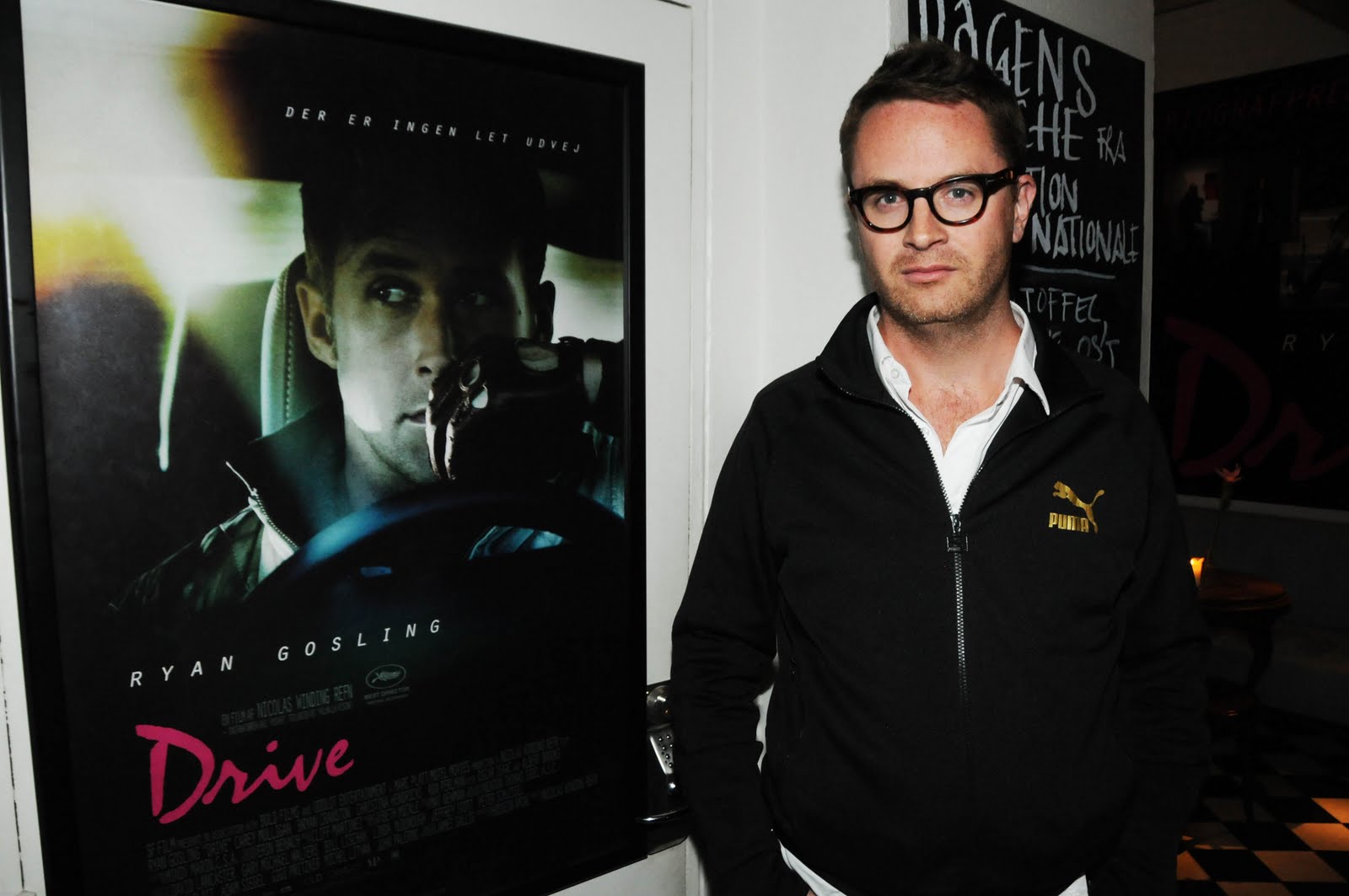
Ryan Gosling stars as the Driver in yet another performance that has helped to cement him as one of Hollywood's top actors. Nicolas Winding Refn directs him with ease. With Drive, Refn has proven himself as one the premier directors of his generation. Drive, along with his previous films like Bronson and the Pusher trilogy, is not necessarily a reinvention of modern cinema, but more or less a reinterpretation of the days of Cinema past. Refn is startlingly good, so good I get goosebumps just from watching his scenes take time and build up. Finally the likes of Scorsese and Cronenberg can take it easy, and Tarantino and the Coens can step aside to make way for the next great talent in film direction: Nicolas Winding Refn.

Drive takes its lead from, quite possibly, the coolest film ever made. Jean-Pierre Melville's 1967 magnum opus Le Samourai.


Refn's creation, the character of the Driver, is cut from the same cloth as Le Samourai's Jef Costello.  The characters share several likenesses, the least important of which being a mysterious and sordid past. The most important likeness being the almost ritualistic way both characters carry out the tasks assigned to them, the lonely lives in which they traverse through a disconnected and oblivious habitat, the trust that doesn't come easy but when it does it is given to a pretty girl who seals both of their fates, and most interestingly, the eyes. Ryan Gosling must have studied Alain Delon's performance as they both seem to communicate most of the plot-points with their eyes and only their eyes. The Driver's real name could easily have been Jef Costello as far as I'm concerned. This is also telling of how many different ways the same film can be so influential to extremely different ends. This polarity is best explored by the movies Drive and John Woo's 1989 The Killer. Both films are flamboyantly open about the debt each owes to the influence of Le Samourai. Where Drive is almost an arthouse action film, the Killer is the exact opposite of that. But influence on either film is unmistakable, Le Samourai wrote the book, and Refn has memorized each and every passage. Yes, it doesn't just stop with Gosling's performance, Drive owes a great deal to Le Samourai in almost every single department. The pacing Refn embraces is classic Melville, the way he tells the story is almost formulaic of a Melville crime picture. Drive, in essence, is an American action film with 60s French sensibilities. People may seem to give Drive too much credit in the originality department, where much of the credit is Melville-deserved. But I don't hold anything against Drive for being almost a reinterpretation Le Samourai. I see Drive for what it was always meant to be, the warmest and most sincere thank you letter to classic Cinema ever filmed. Refn does no hiding when it comes to the Melville influence, its there staring you right in the face. Bravo, Drive, Bravo! Melville would be proud. 


What is most unique about Drive is the fact that the film is just as much a salute to the French New Wave of the sixties as it is a reimagining of the mainstream American cinema of the eighties. Surprisingly enough, in a film that boasts a very large and formidable Arthouse following, 1986's Cobra, 1985's To Live And Die In L.A., and several other nods to 80s cinema is almost interchangeable with the 60s influence. Where the 60s influence may be much more subtle and much more consistent throughout, the 80s influence is mostly on the surface. The 80s influence in Drive is of the strictly superficial variety, which is both faithful and respectful of the 80s films and techniques certain areas of the film are modeled after. Neon pink title card, synthesizer soundtrack, mood changes, the poster art, and the occasional trademark 80s lighting. Although a caricature like Marion 'Cobra' Cobretti can in fact be found on the surface of the character of the Driver, that is only the surface, it is not the actual substance of the character. The substance of the character is Le Samourai's Jef Costello. Its almost as if the movie's true colors are of the Melville variety, but it masquerades itself as something much more accessible. Drive pretends to be an 80s American action film. But Drive is so much than that, as any semi-educated cinefile will tell you, Drive is film that wears several different masks. Its true identity is that of Melville. And I can't think of a better frame of mind than that.


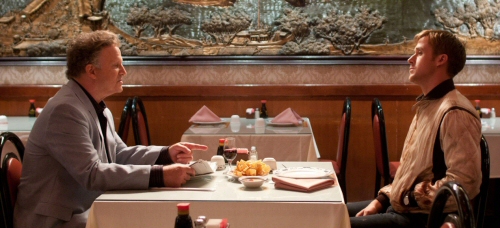
Cast-wise, yes, Albert Brooks steals the show. The character Brooks plays is also one of the only non-french influences on the film. Bernie Ross is wholly American, and that is why he is such a vicious character. Bernie Ross is an 80s action villain, and he is pitted against a 60s character study. The clash is almost inevitable, but the mutual respect is the most rewarding aspect of their relationship. Same can be said about fans of the Arthouse and of the Mainstream. There is a mutual respect there, although all too often these sects of film fans and filmmakers will clash, they are nothing without the other. That said, in theory the rift between Bernie Ross and the Driver can be symbolic of several different things: Mainstream vs Arthouse, Excess vs Conservation, Action vs Meditation, European sensibilities vs American know-how, but most daringly it represents the Death Of Modern Cinema. All the greats are killing each other. Film cannot survive in a climate of servitude to the past. Mainstream wounds the Arthouse, the Arthouse fights back. Both the Mainstream and the Arthouse refuses to let go of their history, therefore they are doomed to tell the same stories over and over again, and cut the other's throat when necessary. The current state of filmmaking is in a very sad state of affairs as of late, Drive is a film that pits over-used caricatures, genres, and eras, popular of modern visual storytelling, against each other, until once everything is done, destroyed, and wounded. All you are the left with are the end credits, and the promise of a stripped down and re-imagined future in filmmaking.

Overall, Drive is a perfect film. If you haven't seen it, I recommend that you do so immediately. If you have seen it, I don't care if you liked it or not, WATCH IT AGAIN. This film is trying to communicate the world to you, open up and listen.


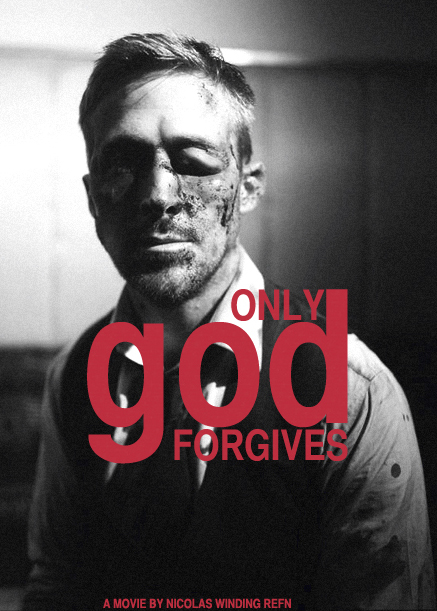
 And be on the look out for the next Gosling-Refn team-up with Only God Forgives! My most highly anticipated movie event of 2013!


As a huge fan of both Drive and Bronson, Only God Forgives sounds incredible. All of the released stills are looking great, the plot sounds insane, and Refn and Gosling just may be the new De Niro and Scorsese. Don't quote me on that, but if they keep the quality film-making up, who knows?