 Franz Sanchez: You could have had everything.
James Bond: Don't you want to know why?
Timothy Dalton's run as James Bond was very short-lived. In this article, I am going to explore why. Dalton starred in two films as Bond, The Living Daylights and Licence To Kill, and subsequently stepped down from the role of 007. The fans never seemed to recognize Dalton as Moore's successor, and to this day, most can't seem to appreciate what he did for the series. Why? The answer is quite simple. Dalton's Bond was relatable, human, and susceptible. James Bond was always an idea, a comic concept, and a fantasy. Dalton's Bond was a human being, all the while he still retained all of the charisma and likability that had carried the character up to that point. But giving Bond a human feel would be Dalton's undoing.
 Dalton's Bond was ruled by his emotions, this point is made abundantly clear in Licence To Kill where Bond's emotions lead him to ruin time and time again. The problem most fans have with Licence To Kill are in part some of the reasons why I like it so much. The film was criticized for not feeling like a true Bond picture, but more like a renegade cop movie that would have been quite commonplace in the late eighties. But that brings up a very interesting concept. A renegade by definition is a deserter, someone who rejects lawful or conventional behavior. Before Licence To Kill, Bond had been well-established as a symbol of efficient and heroic militarism, a cog in the machine of a government that was always morally and ethically absolute. Essentially, James Bond was the poster boy for covert militarism at work. In Licence To Kill, Dalton's Bond does the unthinkable when he disobeys a direct order from MI6 and disregards the fact that his licence to kill has been revoked by the very agency that issued it.
 Dalton's Bond feels that an injustice has been done, an injustice not recognized by MI6, and promotes himself from secret agent to judge, juror, and executioner. He deserts his government in pursuit of a greater institution. James Bond pursues revenge and receives bloody satisfaction. You see, its one thing to say that Licence To Kill feels more like a renegade cop movie than a Bond picture, but its another to blatantly overlook the implications that becoming a renegade had on a character like James Bond. This is Bond without his gadgets, without back-up, without a lifeline to MI6, and this is Bond without a country. Bond is not fighting for national pride here nor is he risking his life to save the world from nuclear catastrophe. He is out to seek revenge for one lost life. He is emotional, overwrought, and cracks in his facade are clearly visible throughout the film. This time its personal. People don't like it when James Bond gets personal, or at least they weren't too keen to it in 1989.
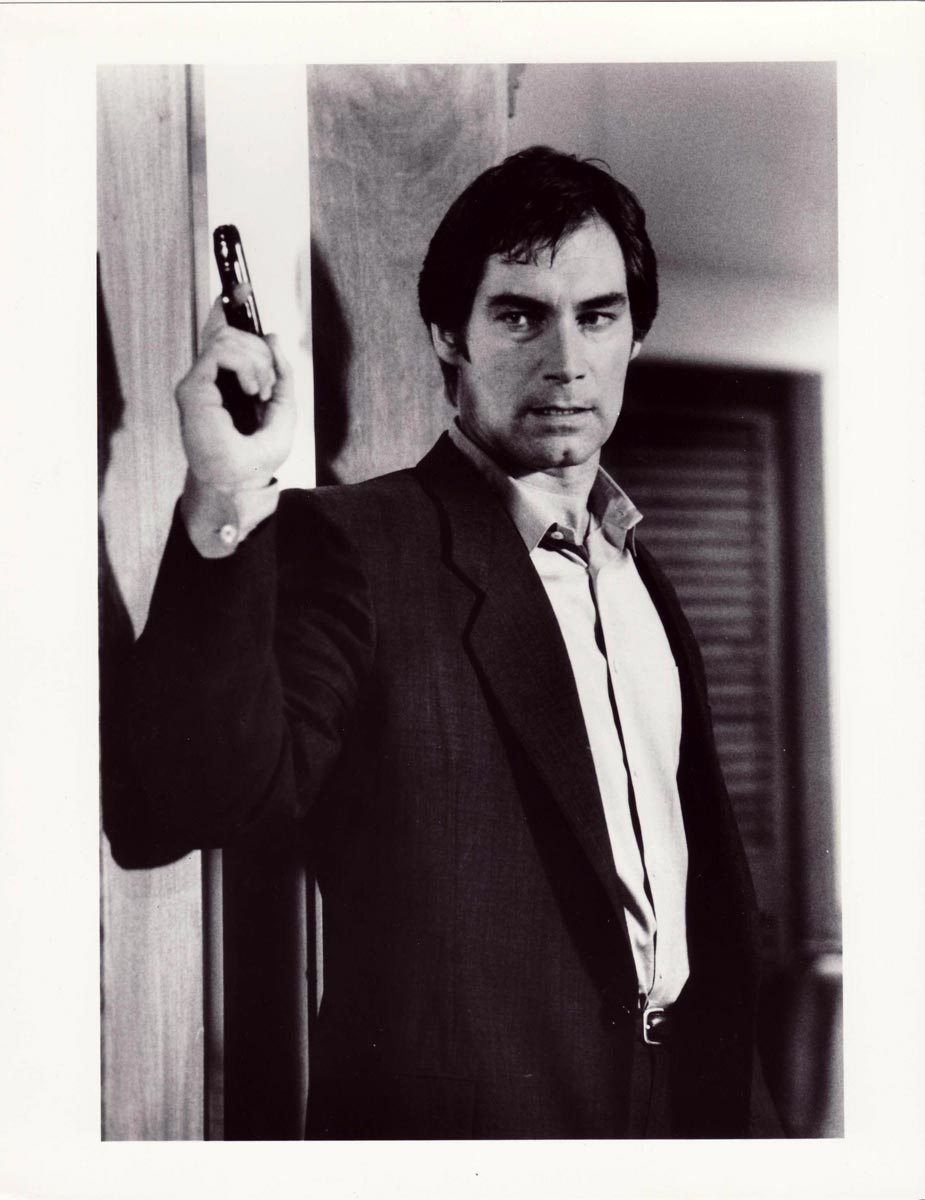 Bond had always been able to separate himself from his work, something Dalton's Bond could never do. Even in The Living Daylights, everything was personal for Bond. Dalton's Bond was not afraid to allow himself to be emotionally affected, or as most fans and critics saw it, Dalton's Bond was incapable of completing a mission the way a 00 ought to. In fact, Dalton's replacement was one Pierce Brosnan, and Brosnan to me was nothing more than a bland continuation of Roger Moore's interpretation of the character. And in Brosnan's first bond movie, GoldenEye, he explains that his cold resolve is what keeps his alive. What Brosnan's Bond is basically saying here is that a real man has to learn to conceal his emotions rather than express them to anyone in any capacity. He's saying that a true man is not ruled by his emotions, but controls them from ever affecting his work, and he's saying that if a man does not do these things he will die, be rendered obsolete; replaced. I consider that a direct attack on Dalton's previous run. But that's what fans wanted, if Bond were to be noticeably emotional or damaged then the fans would have to feel things. They wanted their Bond to have less depth than a comic book superhero. They wanted Bond to get the girl, kill the villain, save the world, and to never under any circumstances question his government or his methods.
 In Licence To Kill, Dalton's Bond systematically defeats the villain, Franz Sanchez, in a way that could only be described as both obsessive and compulsive. He actually considers Franz Sanchez equally dangerous, and although he gets his little one-liners, he endures far more moments of doubt than most Bond fans are comfortable sharing with him. Dalton's Bond was not a superhero, but Dalton's Bond was revolutionary nonetheless. People like to call him the darker of the Bonds, and that is almost entirely untrue. He was the most human and passionate of them all, and there is absolutely nothing dark about being human and passionate. Bond fans seem to view emotion as heavy or adult. Well, I just think most Bond fans are delusional.
Daniel Craig's Bond seems to be getting far too much credit at the moment, especially in the character development department. If Dalton had been given the opportunity to make another Bond film, I feel as if the character would have developed much faster than he has. Dalton seemed to be pushing the character in an exciting and visceral direction, and Brosnan took the character a step backward. Now it is 2013 and James Bond has officially cried on film. Take a look back at Dalton's Bond, and try to tell me that sort of breakthrough wasn't long overdue.
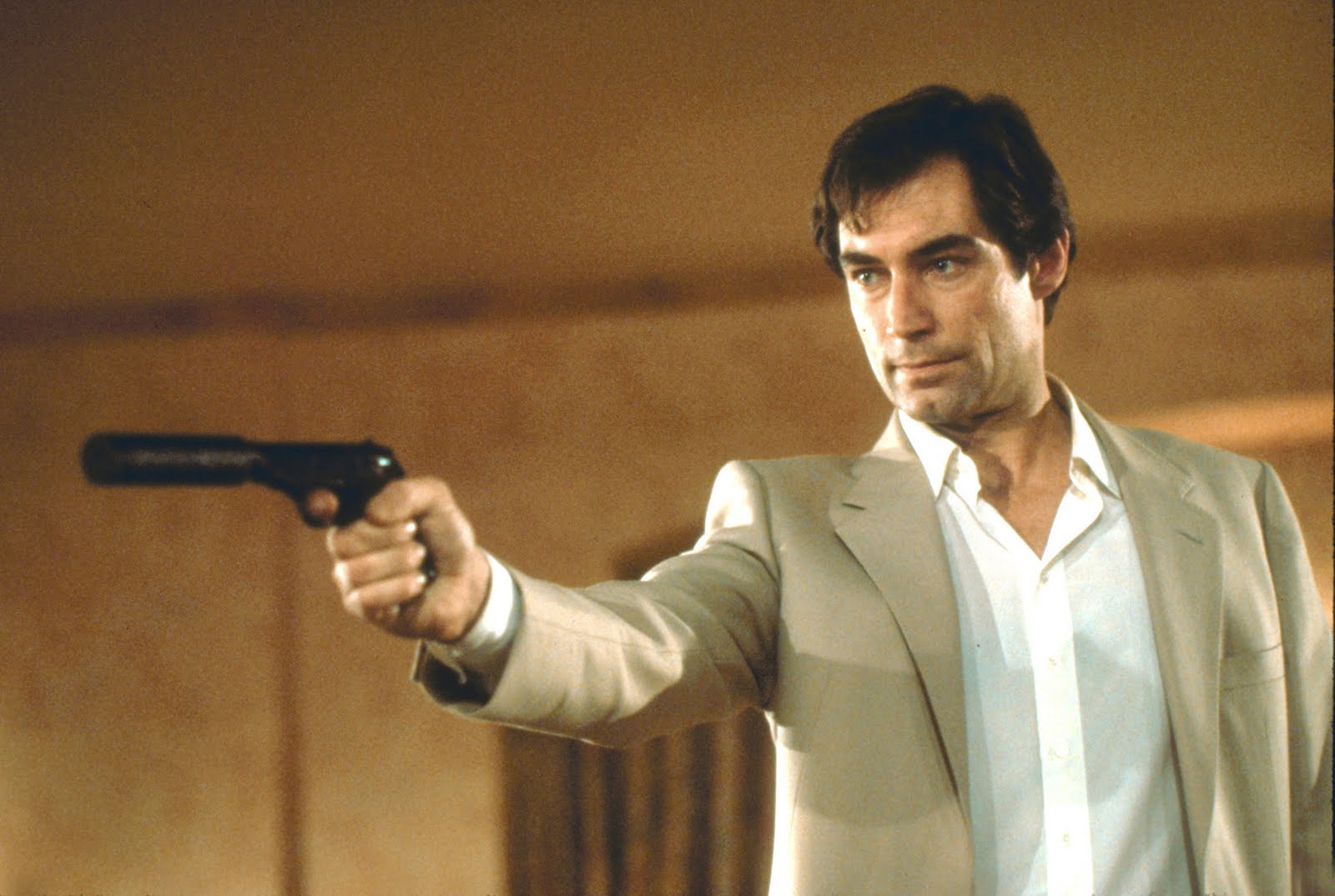 In closing, I would just like to say how important Dalton's run was to the series. His films remain classics, cult or otherwise, and he is slowly getting recognition for the revolutionary way he handled the character. One of the biggest upsets in the entire Bond universe was the fact that Dalton was axed after only two films. Maybe Licence To Kill illustrated the emotional complexities that the character was capable of twenty years too soon on an audience that were simply not ready for a Bond they could actually touch.
 Thanks For Reading!
-Zach Frances



.jpg/800px-Fiona_Volpe_(5).jpg)


